
兰陵王泉州口岸首个进境水果指定监管场地获批_我的网站
一 | AI摘要 泉州晋江国际机场获批进境水果指定监管场地,系泉州关区首个。 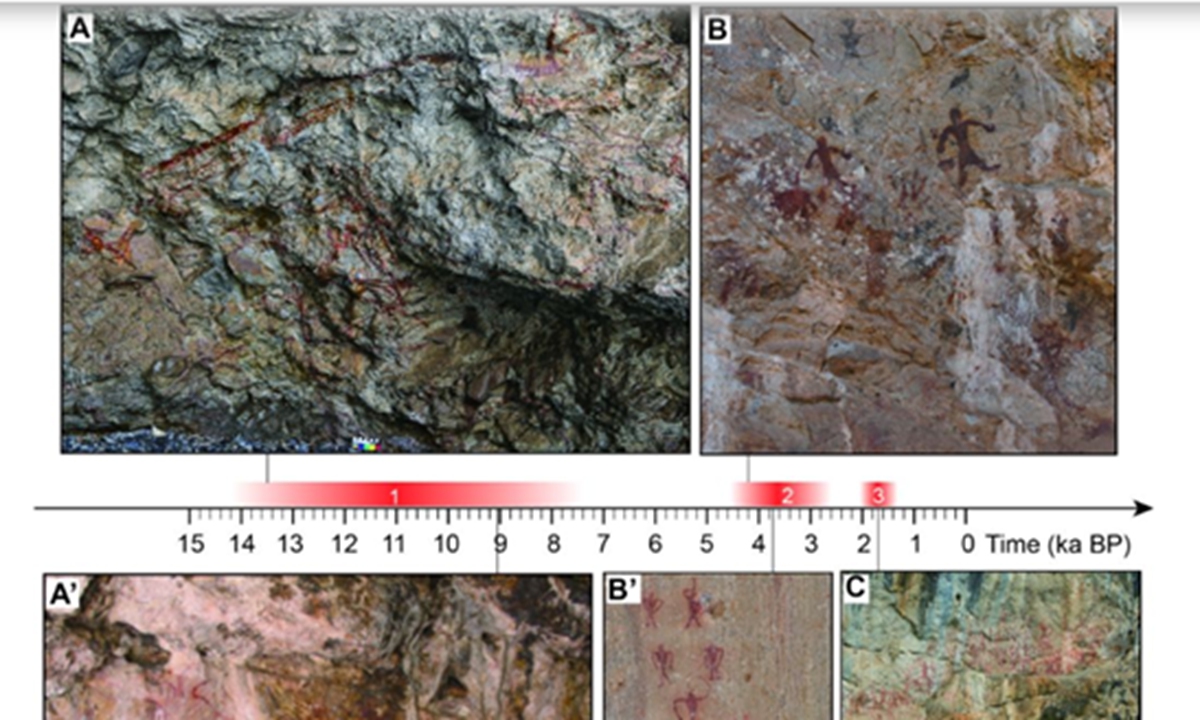 Chinese researchers have obtained the first absolute dates for rock paintings at the Mangguan rock art site in Southwest China's Yunnan Province, pushing the known history of rock art created by prehistoric settled communities in the region back to about 4,220 years ago. The paintings also suggest cultural interactions more than 4,000 years ago between Southwest China and civilizations along the Yellow and Yangtze rivers, as well as possible exchanges with neighboring parts of Southeast Asia, including present-day Myanmar, Thailand and Vietnam, a member of the research team told the Global Times. The Yunnan Provincial Institute of Cultural Relics and Archaeology, in collaboration with Nanjing Normal University and other institutions, have recently made a significant archaeological breakthrough. Through systematic surveys and uranium-thorium (U-Th) dating at the Mangguan site in Gengma county, the research team obtained the first absolute dates for the site's rock paintings, tracing rock art created by prehistoric settled communities back to around 4,220 years ago. The findings were recently published in the international journal Journal of Archaeological Science: Reports. The Mangguan rock paintings represent one of the best-preserved prehistoric rock art sites in Yunnan. The research team presented high precision U Th dating of carbonate accretions that stratigraphically overlie the painted motifs at the Mangguan site, according to the paper published in the journal. The dating results show that carbonate deposits overlying a human figure yielded a corrected age of 4,240 ± 19 years before present, confirming that ancient people living in the region had already produced mature figurative art at least 4,220 years ago, Wu Yun, first author of the paper and an associate researcher at the Yunnan Provincial Institute of Cultural Relics and Archaeology, was cited by the Xinhua News Agency report as saying. Dating results from 11 samples taken from different motifs clustered between about 3,907 and 3,056 years ago. By comparison, the Cangyuan cliff paintings had previously been dated to roughly 3,800 to 2,700 years ago. The Mangguan paintings are therefore significantly older, filling an important chronological gap in the region's artistic record before the Cangyuan phase. Shao Qingfeng, corresponding author of the paper and a professor at the School of Geography at Nanjing Normal University, told the Global Times that previous estimates dated the Mangguan rock paintings to a little over 3,000 years ago based mainly on imagery and comparisons with similar regional sites. Using microsamples of secondary carbonate deposits overlying the paintings, researchers have now obtained a precise minimum age of about 4,220 years before present without damaging the rock art. The findings and the establishment of this chronological framework not only strengthen the archaeological foundation for studying rock art in Southwest China, but also provide a direct reference for rock art sites across Southeast Asia that have yet to undergo systematic dating, Shao said. The findings may also challenge long-held perceptions of Southwest China around 4,200 years ago - roughly the era of the Xia Dynasty (c.2070 BC-C.1600 BC) - and help fill a key gap in understanding the pluralistic yet integrated development of Chinese civilization. Shao said that while academic research has traditionally focused on the Yellow River and Yangtze River basins as cradles of early Chinese civilization, sites such as Mangguan and Cangyuan show that stable and culturally active communities also thrived in mountainous Southwest China. The newly established rock-art chronology brings an artistic dimension to the broader narrative of China's enduring cultural development. Moreover, stylistic similarities suggest that Southwest China maintained exchanges with the Yellow River and Yangtze River regions and with early societies in Southeast Asia, providing material evidence of cross-regional interaction more than 4,000 years ago. 。该场地依托东南亚航线优势,将压缩通关时长、降低物流成本,丰富本地鲜果供给,助力航空物流与开放型经济发展。 泉州晋江国际机场物流中心一角 (吴海波/图) 泉州网8月20日讯 (融媒体记者 杜连财 通讯员 吴海波 王凤平)海关总署日前正式批复泉州晋江国际机场进境水果指定监管场地口岸资质。
二 | 这是泉州关区首个获批的进境水果指定监管场地,标志着泉州航空口岸在生鲜冷链物流领域实现突破,将为泉州开放型经济高质量发展注入强劲动能。 据悉,该进境水果指定监管场地严格按照海关总署相关设置规范建设,具备高标准的查验区、冷链仓储区、检疫处理区及必要的技术用房。
三 | 同时,场地配备了先进的温控系统、检疫处理设施及信息化监管设备,能够满足进境水果从卸机、查验、检疫处理到仓储、转运的全流程监管需求。
四 | 该场地的获批,将进一步提升泉州晋江国际机场的综合服务能力,依托机场现有的东南亚国际航线网络优势,搭建高效、便捷的航空生鲜进口通道,有效压缩货物通关时长,降低企业物流成本,丰富本地及周边地区的进口鲜果市场供给,助力共建“一带一路”高质量发展。 “该场地获批后,将助力机场做大做强航空物流业,马来西亚、菲律宾等东南亚国家水果可依托晋江机场现有国际客货运航线直达泉州口岸,大大丰富了本地居民的‘果盘子’。”泉州机场航空物流发展有限公司负责人方海山高兴地说。
五 | 据悉,泉州海关成立工作专班,指导企业按照规范标准建设监管场地和技术用房,并通过海关总署指定监管场地验收组验收。下一步,泉州海关将在筑牢国门生物安全屏障的基础上,通过优化查验流程、实施“优先接单、优先查验、优先验放”等便利举措,确保货物快速通关,保障境外水果以更快速度进入国内消费市场。 目前,泉州晋江国际机场口岸已拥有进境食用水生动物、进境水果两个指定监管场地,具备多元化的生鲜进口口岸功能,将全面推动泉州空港口岸进口生鲜贸易的规模化、规范化发展。
六 | Current article:http://bd43.deshabisaoguonouzuo.cfd/qwnuii9/1tht05t.html Published on:00:52:17 |


